About the Artist
Eric Pape | The Master of the Pageant
Meet Eric Pape
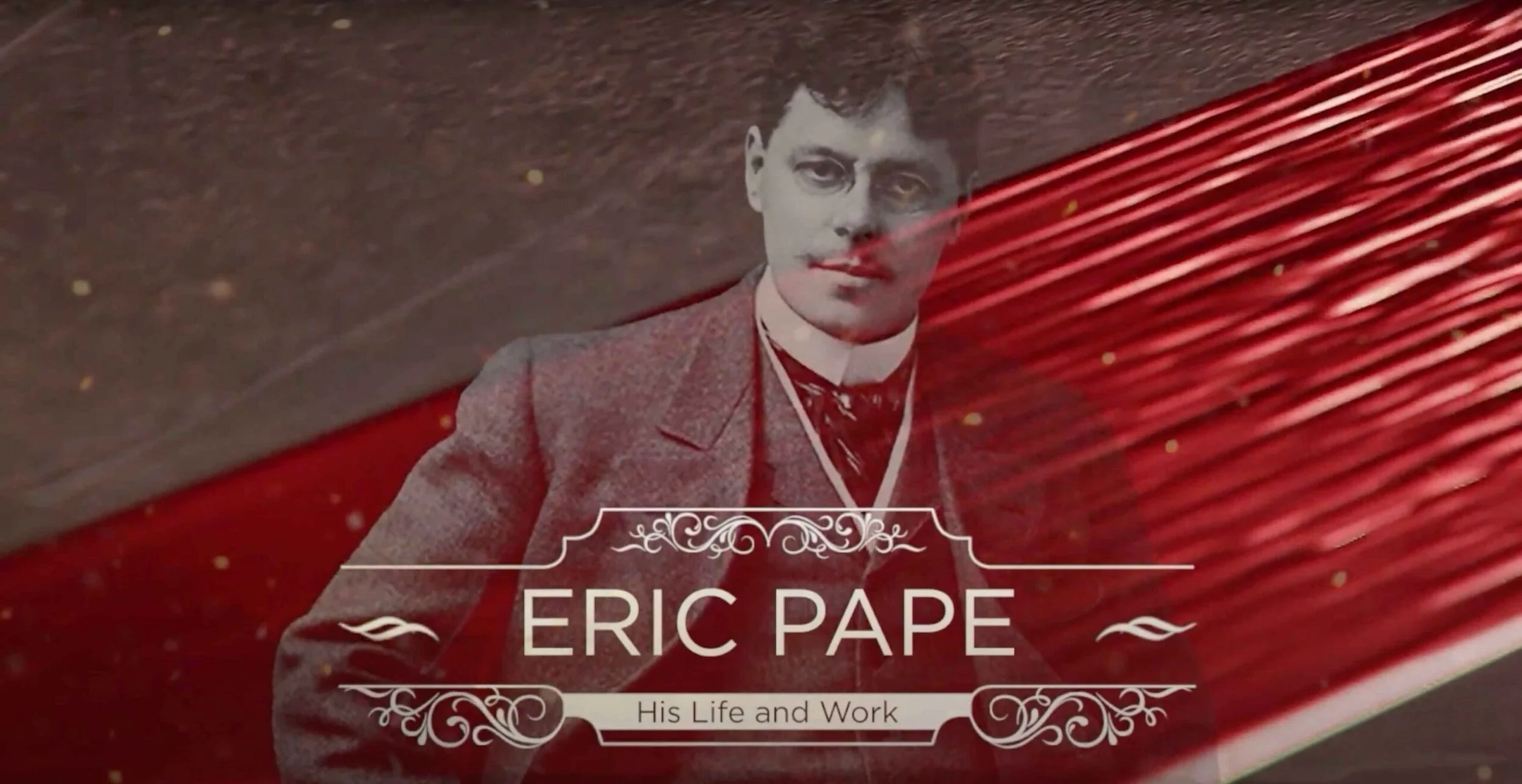
Pape, an American artist whose talents spanned painting, illustration, sculpture, and even theatrical set design.
Celebrated for his bold imagination and technical brilliance, Pape brought history, literature, and everyday life to vivid form. He was not only a painter but also a storyteller, designer, and teacher, whose career bridged continents and artistic disciplines.
His legacy shines as a testament to boundless creativity and artistic courage.
Eric Pape: An Artist's Journey
Eric Pape: An Artist's Journey
THE EARLY YEARS OF PAPE
Formative Days in San Francisco & Paris
Eric Pape, born Frederick Ludwig Moritz Pape Jr. on October 17, 1870, was the son of Friederich Ludwig Pape, a German emigrant pioneer at the time of the California Gold Rush of the 1850s. Friederich married young Maria Meier from his hometown in Zeven, Germany and they settled in San Francisco running a cigar import business and tavern. Friederich was a nationally recognized prize-winning sharpshooter and a leader in the local militia and German immigrant community.
As a school boy his son Eric studied violin with the famous conductor Hermann Brandt and became the youngest member of the San Francisco Philharmonic at age 16. Eric, however, also showed a talent for art, creating skillful drawings to decorate his school rooms and his father’s tavern. The young prodigy was soon enrolled at the San Francisco School of Design, studying with the award-winning Danish painter Emil Carlsen. He soon began publishing his drawings in western magazines. At the age of 18, Eric traveled by train across the US and by steamship across the Atlantic to study art in Paris, the epicenter of the art world in the late nineteenth century, a bold journey that would shape the rest of his life.
In Paris, Pape began his studies at the Académie Julian with Jules Lefebvre, Benjamin Constant, and Jean-Paul Laurens. He soon after was accepted at the prestigious École des Beaux-Arts, where his application drawing was rated third out of several hundred applicants. There he studied with the orientalist master Jean-Léon Gérôme. These years expanded his technical skills while encouraging a spirit of adventure and an interest in exotic subjects and locales.
It was in Paris that Pape met fellow artist Alice Monroe, also a talented painter and musician. The two married in Dover, New Hampshire, in August 1894. Alice would remain an important creative and emotional anchor during the early formative years of Pape’s career, until her tragic death in 1911.
AN ADVENTUROUS ARTIST
European Journeys and Early Acclaim
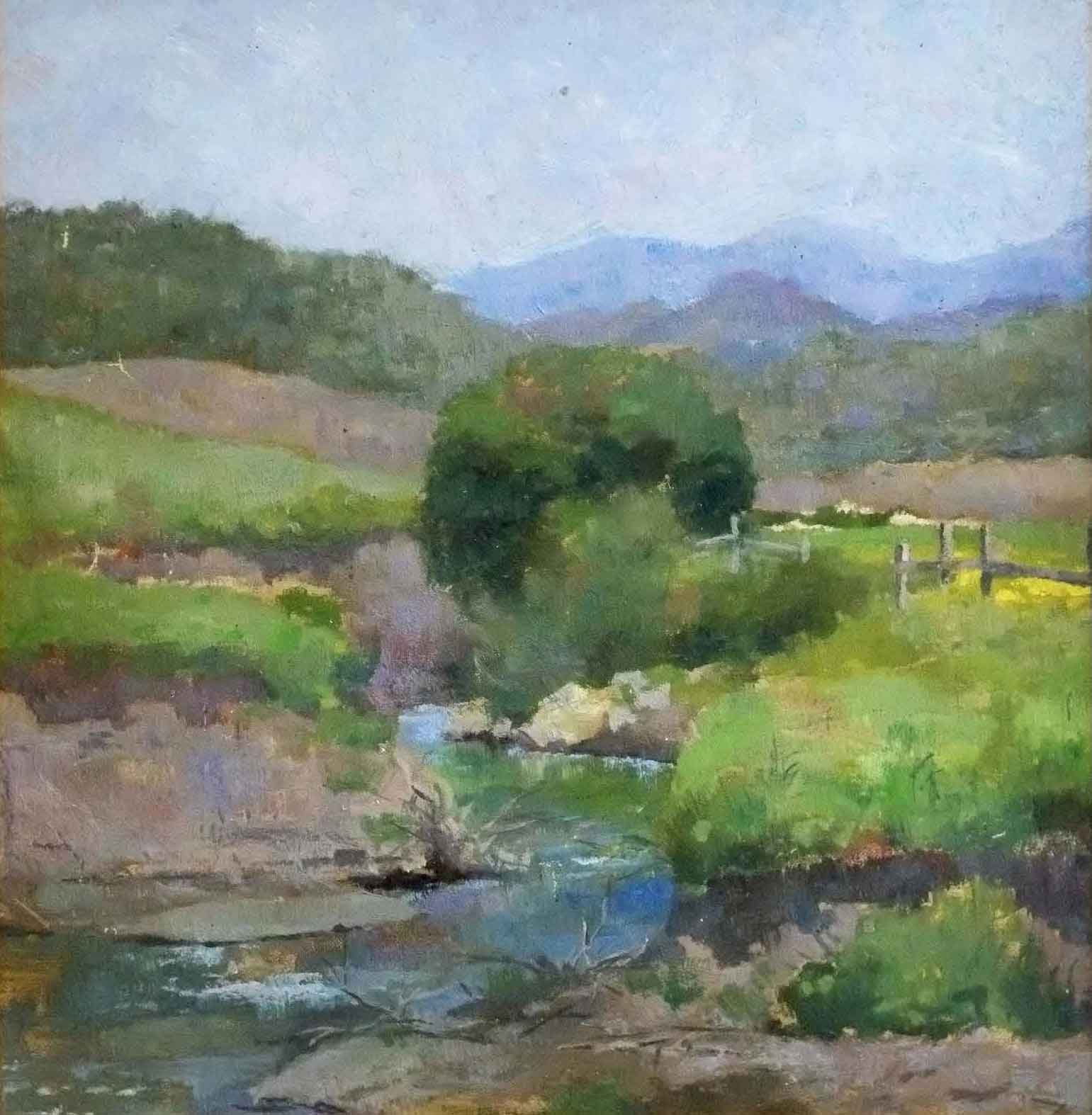
Eric Pape was gifted a new paintbox by his family when he traveled to study in Paris, and over the years he wrote every location he visited to sketch and paint inside the lid; Antwerp, Dieppe, London, Rouen, Brussels, Giverny, Rhiems, Hamburg, Bremen, Rome, Milan, Alexandria, Cairo, Damascus, Constantinople and dozens of other locations across Europe, the Middle East, America and Mexico. One important location he traveled to while studying in Paris was to Zeven in northern Germany in 1889, the town his mother and father had immigrated from, where he lived and painted in the rural farming community.
It was here that he painted The Young Spinner of Zeven, his first major artwork accepted for exhibition at an important Paris Salon, a massive full-length portrait of a young girl at her work, filled with warmth and humanity. The piece debuted at the Société Nationale des Beaux-Arts in Paris and later earned a medal at the 1894 California Midwinter Exposition (World’s Fair), firmly establishing Pape as a young artist of international promise. Photos show the massive canvas hanging in the Pape home in San Francisco; it was sadly destroyed in the fires following the 1906 earthquake that devastated San Francisco.
It was his later journey to Egypt in 1890 that left an indelible mark on his career. For two years, Pape lived in Cairo and slept near the Great Pyramid and the Sphinx, sketching and traveling by day, absorbing local traditions, and painting vivid landscapes in the brilliant moonlight over the desert at night.
His dozens of depictions of Egyptian landscapes and monuments, and portraits of the Egyptian people exhibited in Paris, Cairo, and at the 1893 Chicago World’s Columbian Exposition, are infused with both awe and intimacy, revealing the perspective of an artist who wasn’t merely a visitor, but a participant in the life and atmosphere of the place. These artworks and this experience influenced many prominent commissions he received afterwards.
BUILDING A LEGACY
His Return to America
When Eric Pape returned from study in Paris to America in 1894, he had not only established his credentials as a fine artist of distinction in the Paris Salons but was already widely known through his many illustrations for deluxe book editions and in popular mass market magazines. The year of his return to America he married fellow artist Alice Monroe, and the two settled in Boston.
In 1898 Eric Pape and Alice Monroe founded the Eric Pape School of Art in Boston, modeled on their experiences at the Académie Julian in Paris. Thanks to Pape’s recognition as a popular magazine and book illustrator, the school soon became the largest art school of its kind in America. Among the hundreds of students studying at the school each season were many soon to be famous artists like N.C. Wyeth, who would go on to become one of America’s most celebrated illustrators. The art school Eric and Alice founded was closed after the conclusion of the 1912-1913 season; the death of his young wife Alice in the summer of 1911 from appendicitis left Pape unable to continue on alone, and he gave up the care of his young son to friends.
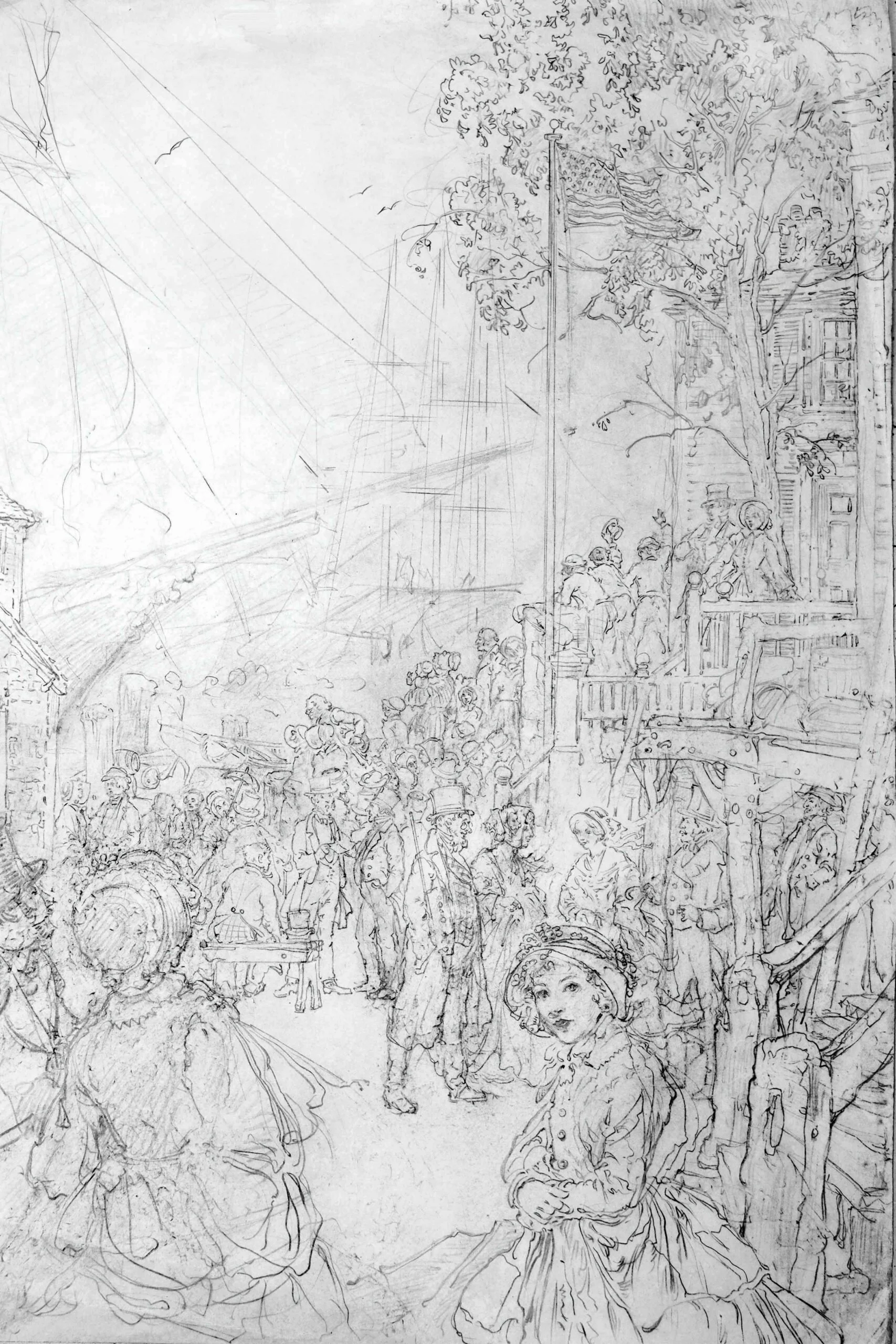
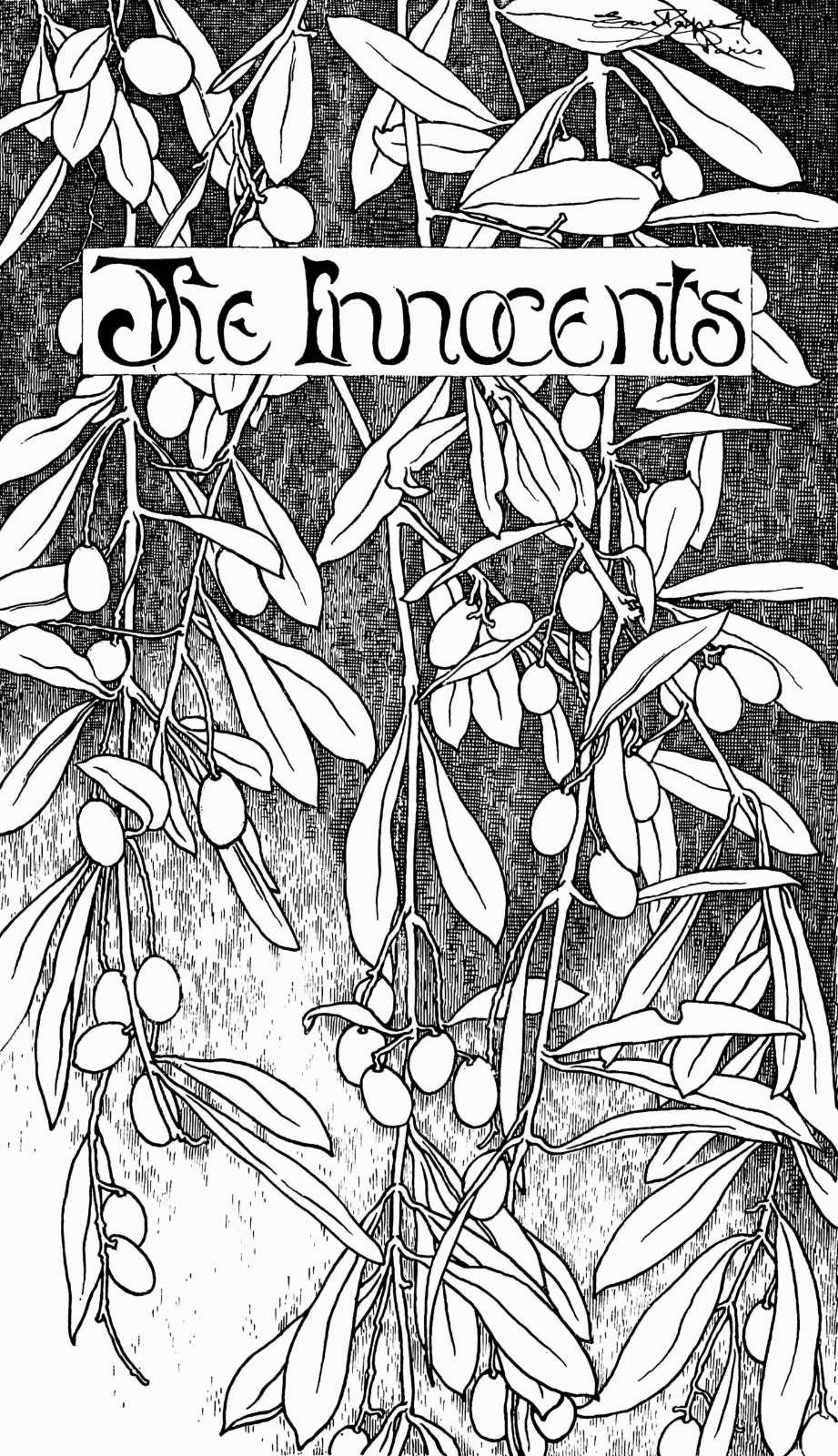
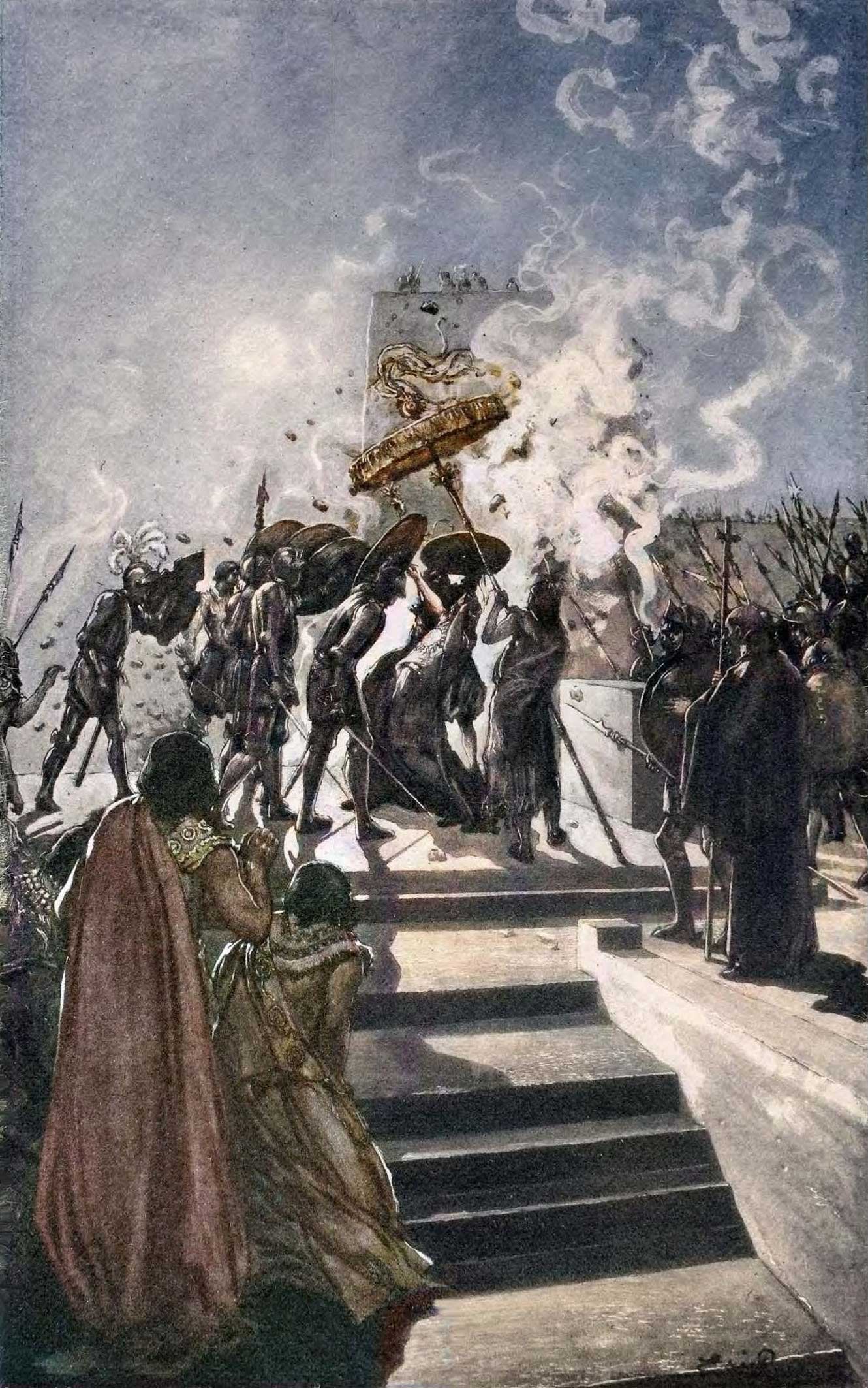
During the years before his wife’s death Eric Pape’s work as an illustrator continued to flourish. He contributed to Scribner’s Magazine, Cosmopolitan, The Century Illustrated Magazine, Collier’s, and others, bringing literature to life with his distinctive visual storytelling. His illustrated editions of the four volume The Biography of Napoleon Bonaparte by William Milligan Sloane (1899), The Turn of the Screw by Henry James (1898), The Fair God by General Lew Wallace (1898), The War in the Air by H. G. Wells (1908) and the four volume edition of The Poems of Madison Cawein (1907) demonstrated his breadth of talent, combining dramatic narrative depth with artistic elegance in a style perfectly suited to the tastes of the public in the late 19th and early 20th centuries.
A DIVERSE PERCEPTION OF ART
A Versatile Creative Force
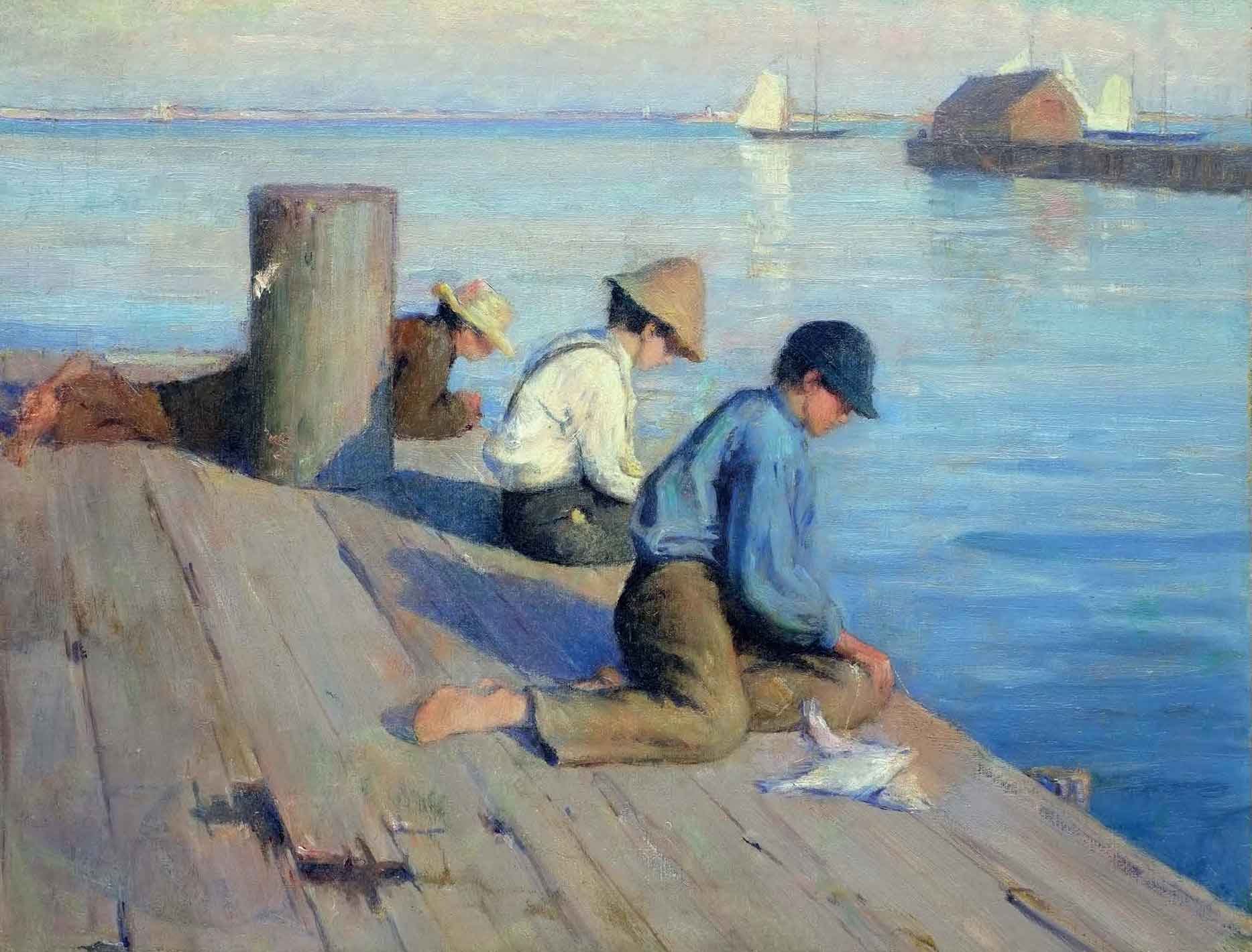
Trained as a classical violinist, and later studying with the lions of the French art establishment, Pape’s creativity was never confined, and no medium was out of his reach. In addition to fine art and illustration, he brought his eye for drama and detail to stage and costume design, creating evocative sets for theatrical productions such as the first New York performance of Trilby staged in 1898 and Percy MacKaye’s Canterbury Pilgrims in 1909, part of the civic pageant in Gloucester, Massachusetts in honor of President Taft billed as “the greatest open air performance ever attempted in the country”.
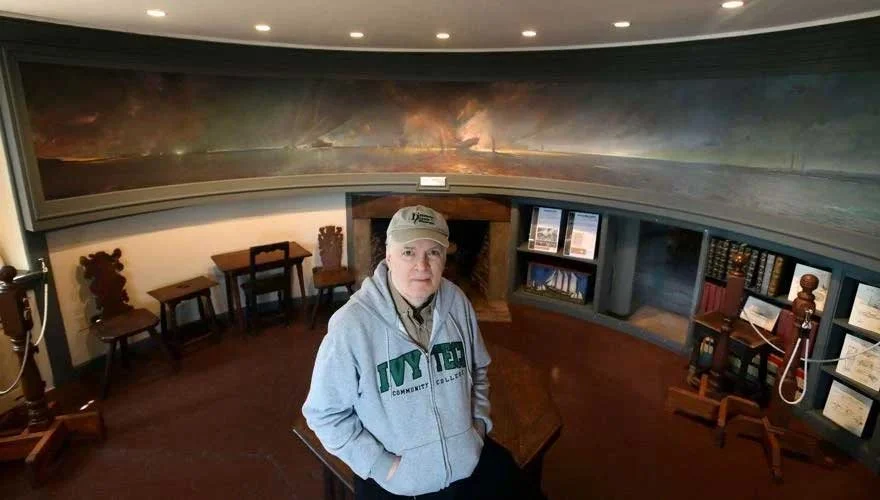
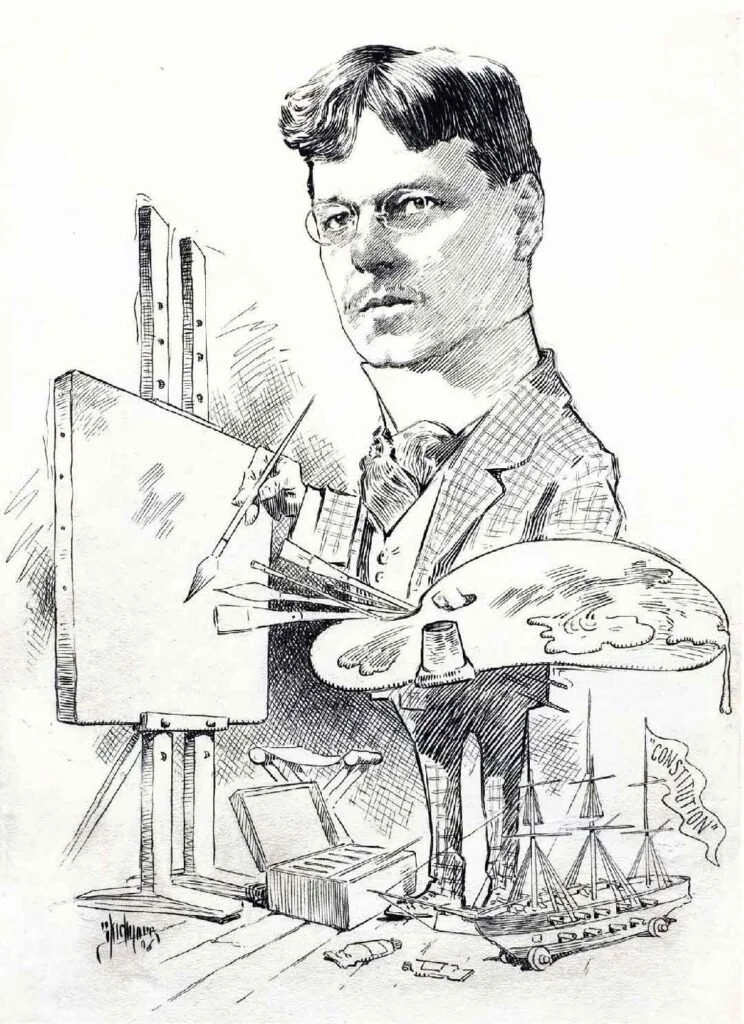
In 1906, his sense of civic duty intersected with his artistry in a remarkable way. Distressed by Navy plans to use the deteriorating frigate USS Constitution for target practice, he designed an illuminated scroll petition, 5 feet wide and 170 feet long, adorned with elaborate illustrations, calling for its preservation. Bearing 30,000 signatures of Massachusetts citizens, he unrolled and presented the scroll on the floor of Congress and helped secure President Theodore Roosevelt’s support for the ship’s restoration. The work was a testament to Pape’s belief that creativity could serve the public good.
Pape later lent his talents in support of the design and organization of charitable stage and music programs in Massachusetts and New York raising funds for the victims of the Titanic disaster, war relief and for victims of infantile paralysis (polio). In addition to his later work on the Broadway stage, as a member of The Players, the private club in New York City for prominent theatrical professionals, artists and supporters of the arts, he provided stage and costume designs for their annual stage revivals in the 1920s and 1930s.
OVERCOMING STRUGGLES
Personal Loss and Resilience in Gloucester
Eric Pape and Alice Monroe built their life in Boston and summered with their students in their home and studios in Gloucester, Massachusetts. They had a son, Moritz, in 1903, and led an Arcadian life yachting off the shores of Cape Ann, dining with the Vanderbilts and Carnegies at Lookout Point on the Hammond estate in Gloucester and teaching art in their Boston studios. The idyll for Eric came to an end all too soon; the tragedy of first losing their stillborn daughter in 1902 and then Alice herself in 1911 deeply affected Eric. He suffered a nervous breakdown in the aftermath of his wife’s death, giving up the care of his young son and closing his popular art school, which soon plunged him into poverty.
During his years of grief, Pape turned for support to the family of mining magnate John Hays Hammond, his close neighbor and friend in Gloucester. As fellow summer residents and patrons, the Hammonds offered shelter and community. They even “adopted” his son Moritz while Eric was recovering from his nervous breakdown.
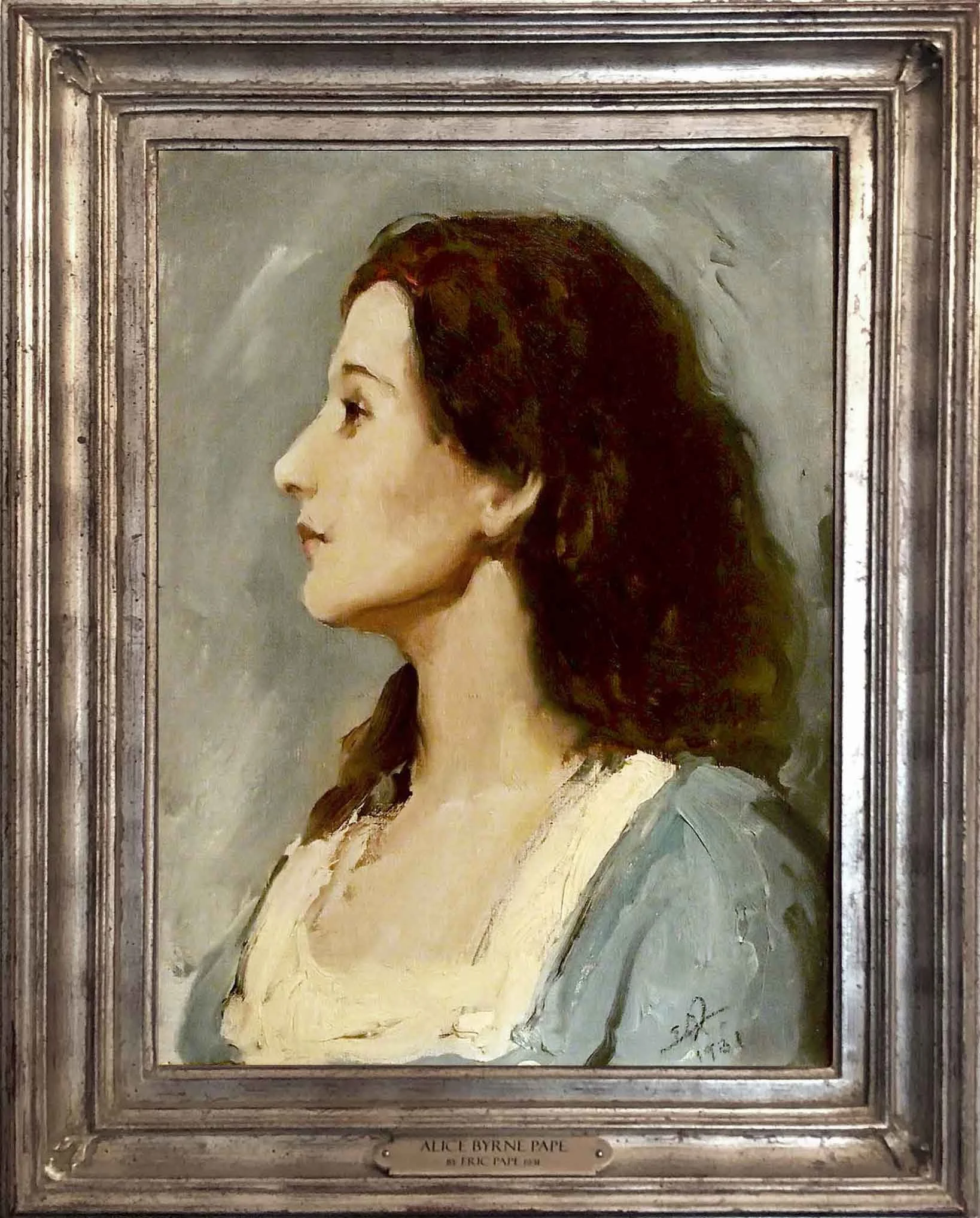
A decade later, Eric found companionship again with a woman strikingly like his first wife in appearance, character and talents, marrying actress and children’s author Alice Byrne in 1920. The re-marriage heralded a period of renewed artistic endeavor and success for Pape, until the economic devastation wrought by the Great Depression of the 1930s drew a final shadow over the end of his life.
A RENAISSANCE
Later Years, Legacy, and Rediscovery
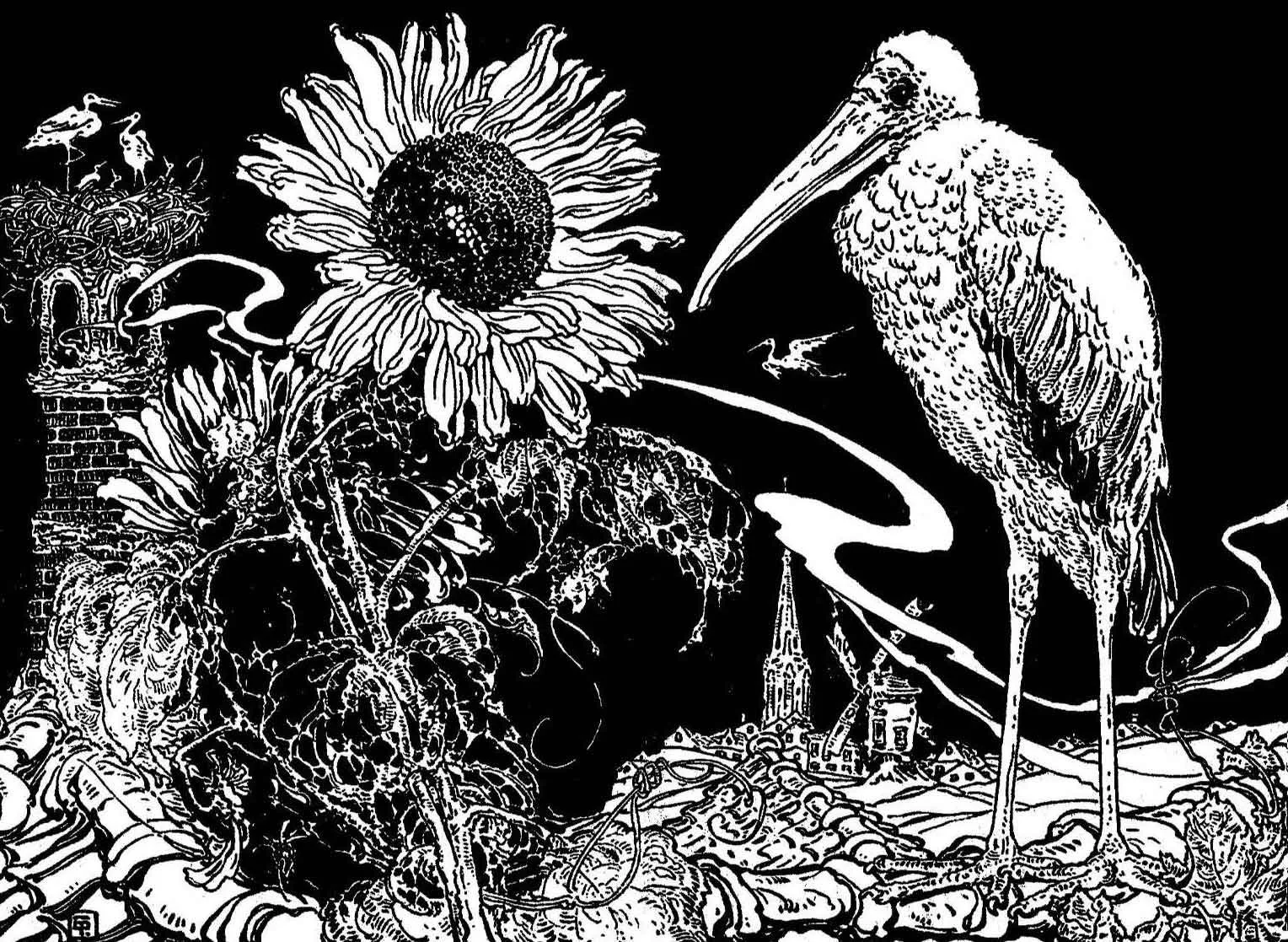
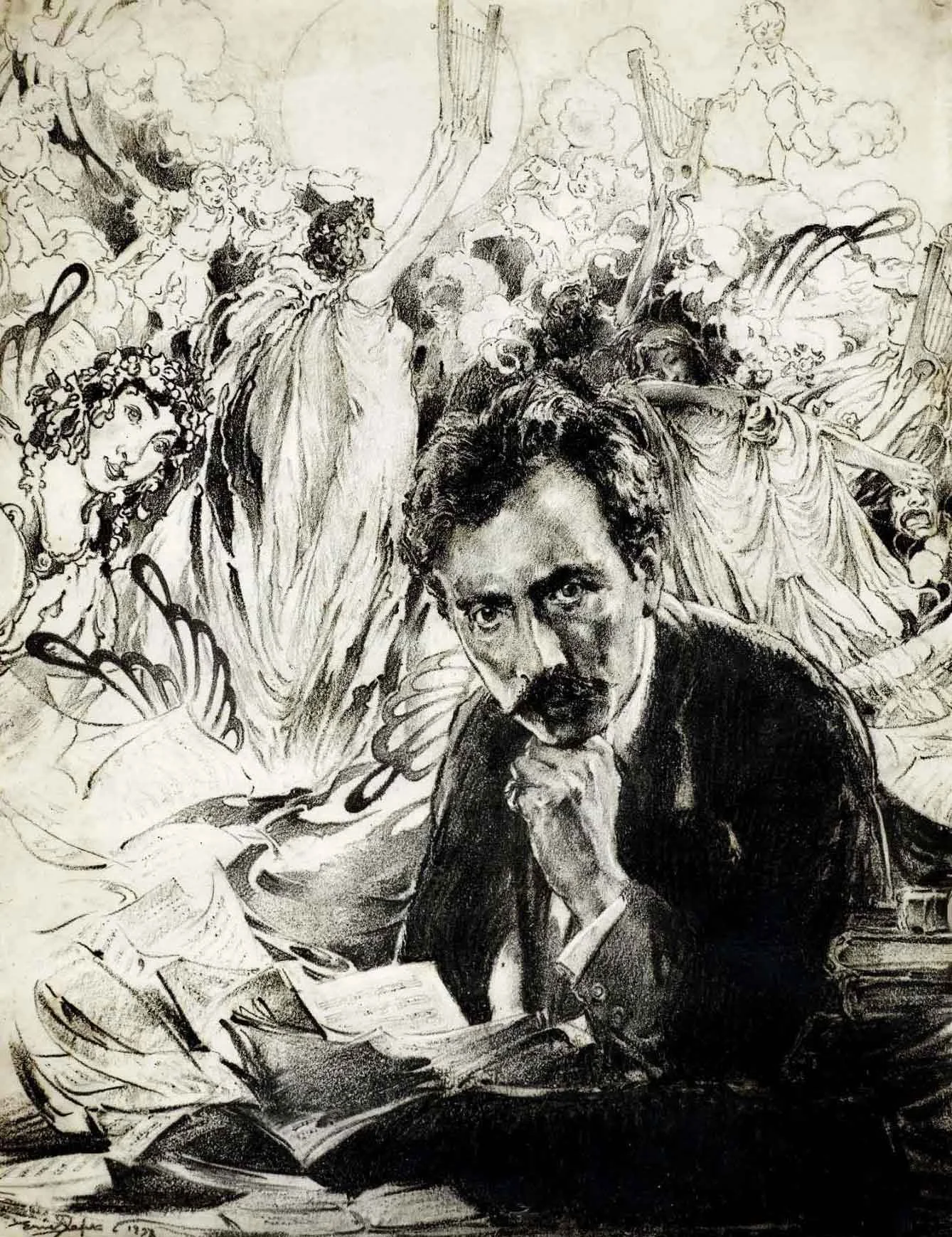
A late in life artistic renaissance after his re-marriage in 1920 led to commissions to create some of his most evocative fantasy drawings for classic children’s books including Fairy Tales and Stories of Hans Christian Anderson, The Arabian Nights. Tales of Wonder and Magnificence and Rip Van Winkle and The Legend of Sleepy Hollow. His final commission to illustrate a deluxe book edition for the centennial of Victor Hugo’s Notre Dame De Paris came in 1928, just before the onset of the Great Depression. During the Great Depression, he survived by producing hundreds of impressive personality portraits of celebrities in lithographic crayon for the New York Herald Tribune, applying the same sensitivity he once reserved for historical subjects to the faces of his contemporaries.
On November 4, 1938, Pape suffered a heart attack in New York City. In a final tragic twist to his life, passers-by stole all the personal belongings and identification from the unconscious man. He was hospitalized on Welfare Island as an indigent, dying three days later without recovering consciousness at the age of 68 and was buried in an unmarked pauper’s grave. His second wife Alice Byrne found him days later. After a publisher fraudulently attempted to claim ownership of all their belongings, including thousands of artworks, a lawsuit restored many items to Alice’s possession. She kept them in storage for six decades until she was institutionalized in her old age and died. Today, Eric Pape’s paintings, illustrations, stage designs, and other art are now held in many public institutions around the world such as the Smithsonian’s National Portrait Gallery, the Library of Congress, the U.S. Naval Academy Museum, and the National Portrait Gallery in London.
Scholars and collectors are still re-discovering the art and history of Eric Pape, mounting the first comprehensive international exhibitions of his restored work in a hundred years and preserving his art through donations and biographical studies. He is remembered as an artist of breadth and heart, one who combined astonishing technical mastery with boundless invention. From his quiet studies of village life to his grand historical scenes and fantastic imaginative tableaux, his art remains a vivid record of an extraordinary life fully lived.
“It's an honor to tell the story of Eric Pape and preserve his work for furture generations to appreciate.”
— Dr. Conn | Collector